


Using frequencies above or below the CB band (on the “upper or lower frequencies”) is called “freebanding” or “outbanding.” Although frequencies just below the CB band (or between the CB band and the 10-meter amateur radio band) may appear quiet and underutilized, they are allocated to other radio services (including government agencies), and unauthorized use is illegal.

Furthermore, illegal transmitters and amplifiers may not meet proper technical standards for harmonic distortion or “splatter,” which can disrupt other communications and make the unauthorized equipment visible to regulators.

Freebanding occurs with modified CB or amateur radio equipment, foreign CB radios that may offer different channels, or with radios intended for export. Legal use in one country may be illegal in another; for example, in the United Kingdom, until June 2014, only 80 FM channels were legal.
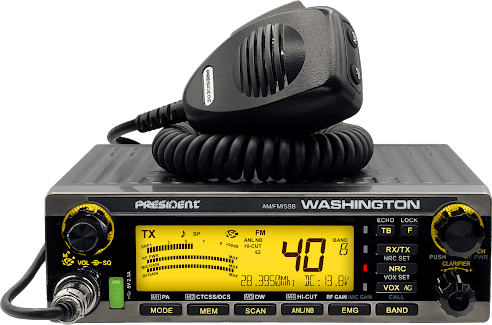
Unlike amateur radios with continuous frequency tuning, CB radios produced for export are channelized. The frequency selection resembles that of modified American CB radios more than a foreign frequency plan. They typically have a rotary knob and a display that shows up to channel 40, but also include an additional band selector that allows all 40 channels to be shifted above or below the band, and a “+10 kHz” button to access the “A” channels of the model control.
These radios can have 6 or even 12 bands, creating a set of quasi-CB channels on many unofficial frequencies. The bands are usually designated by the letters A through F, with the regular CB band having the letter D. The old President Lincoln 1 is a good example of this and is still widely traded on marketplaces today. For example, a user with an export radio who wants to use 27.635 MHz would select channel 19 (27.185 MHz) and then shift the radio up one band (+450 kHz). The user must calculate the correct frequency, although more expensive radios have a frequency counter or a frequency display—two different components that provide the same result. Illegal activities can inadvertently lead to frequencies that are actually in use. For example, channel 19, two bands higher, is 28.085 MHz, which is in a portion of the 10-meter amateur band designated only for Morse code/data.
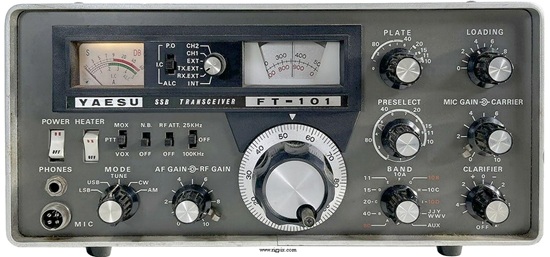
Voice transmissions in a segment designated only for Morse code are easily detected by authorities. Amateur radio operators record, locate, and report frequency violations and infringements of their frequency allocations by pirate broadcasters or illegal operators to the FCC so that enforcement action can be taken.[50] Many freeband operators use amateur radios modified to transmit outside the band, which is illegal in some countries. Older amateur radios may require component replacements. For example, the Yaesu FT-101 from the 1970s was modified for CB by replacing a set of crystals used to tune portions of the 10-meter band, although some FT-101 variants were sold with the US FCC channel standard and were capable of transmitting an additional 10 or more channels above and below the legally permitted 40 channels.

On some newer radios, the modification can be as simple as disconnecting a jumper wire or a diode. Many types of amateur radios can be found on CB and freeband, ranging from full-coverage HF transceivers to simpler mobile 10-meter radios such as the President Washington 2 or a CRT SS 9900. In the United States, the FCC prohibits the import and sale of radios it deems easily adaptable to CB. It is illegal to transmit on CB frequencies with an amateur radio, except in emergency situations where no other communication method is available. In many countries, a gray market exists for imported CB equipment. In some cases, the sale or possession of CB equipment with foreign specifications is not illegal, as it is in the Netherlands, but its use is.
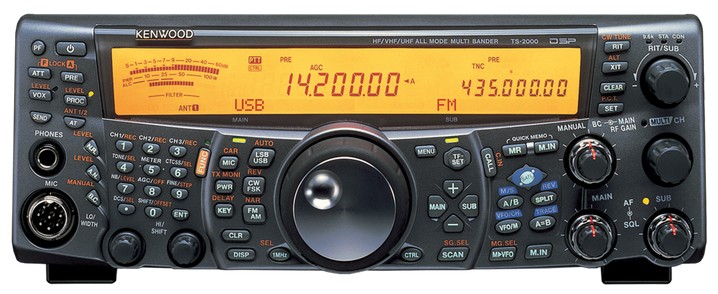
Due to minimal enforcement of CB regulations, enthusiasts worldwide use so-called “export radios” or European FM-CB (frequency modulation) equipment to avoid the crowded AM channels. American AM and SSB equipment is also exported to Europe. “Export radios” are sold in the United States, for example, as 10-meter amateur radio transceivers. The marketing, import, and sale of such radios is illegal if they are distributed as anything other than amateur radio transceivers. It is also illegal to use these radios outside of amateur radio bands, as they are not type-certified for other radio services and usually exceed the permitted power limit.
You can find me on 27.245 MHz (Channel 25) USB with JS8Call.
| Greetings 19AT114 | https://dxernl.com |
 DXERNL
I had the same experience when I started using js8call. It took some perseverance to get the computer and radio…