












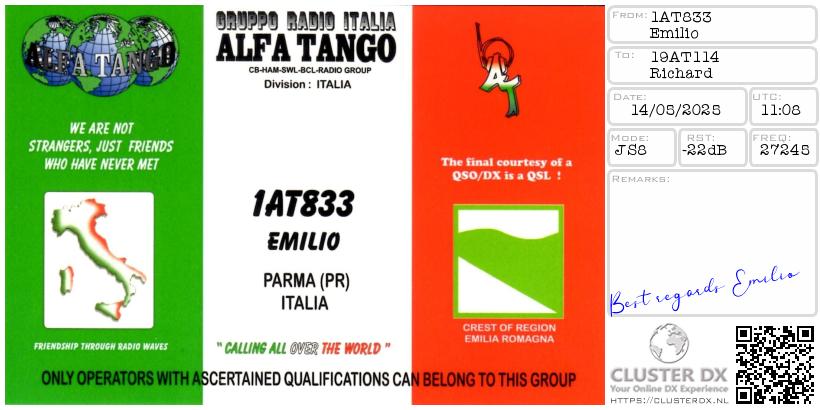

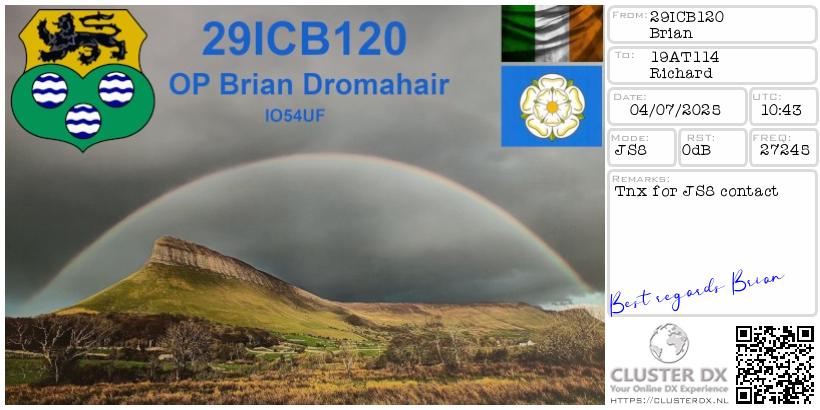

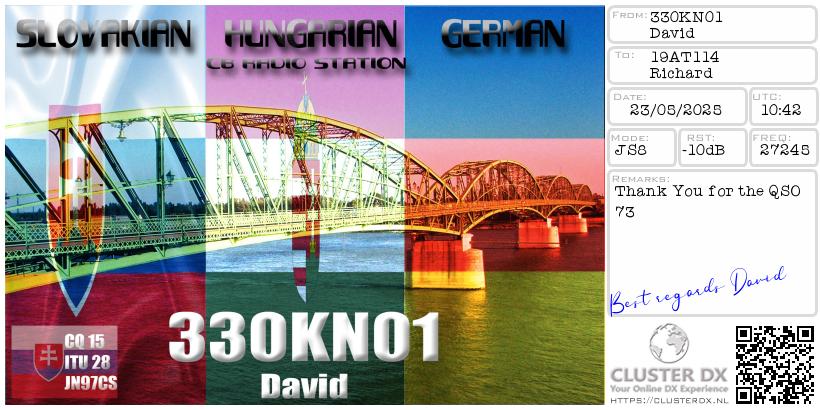

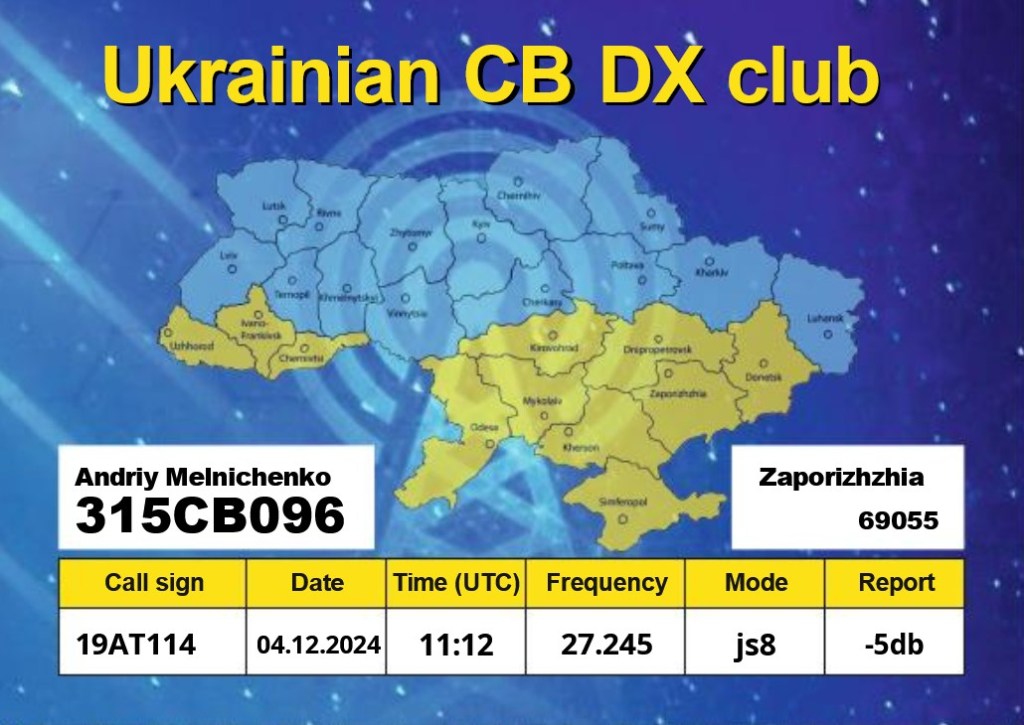
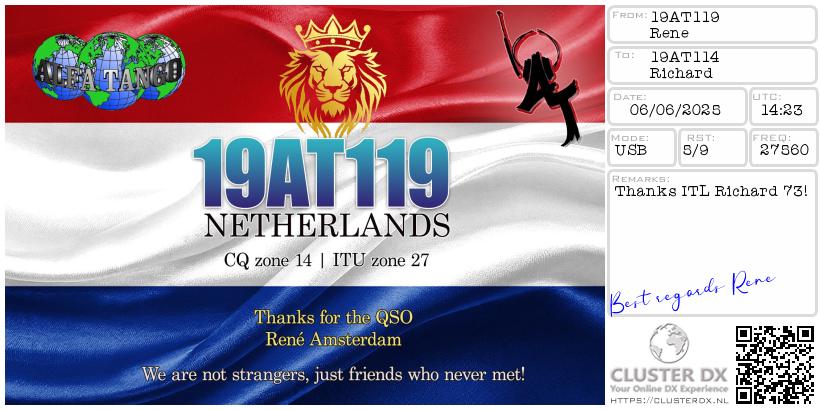


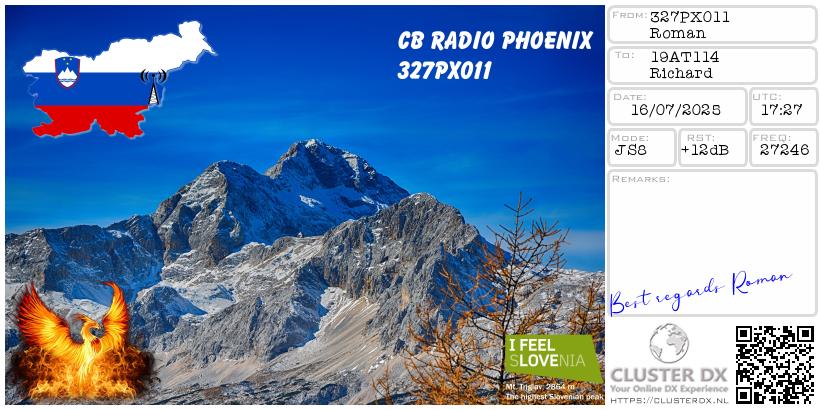


FT8 CB refers to the use of the FT8 digital weak-signal communication mode on the 11-meter Citizens Band (CB) radio frequencies (around 27 MHz), rather than traditional amateur radio bands.
The Name: Stands for “Franke-Taylor design, 8-FSK modulation”
How it works: A computer-based digital mode that transmits short, automated data packets (call signs, grid locators, and signal reports) in strict 15-second time cycles.
Key benefit: Extreme sensitivity. It can decode very weak signals that are far below the audible noise floor where normal voice (SSB/AM) or Morse code fails.
FT8 on the CB (11-meter) Band – WSJT_CB.
- Usage: Some DX operators and hobbyists use modified software (like WSJT-CB) to run FT8 on CB frequencies, commonly experimenting around Channel 26 (27.265 MHz) or similar local calling frequencies.
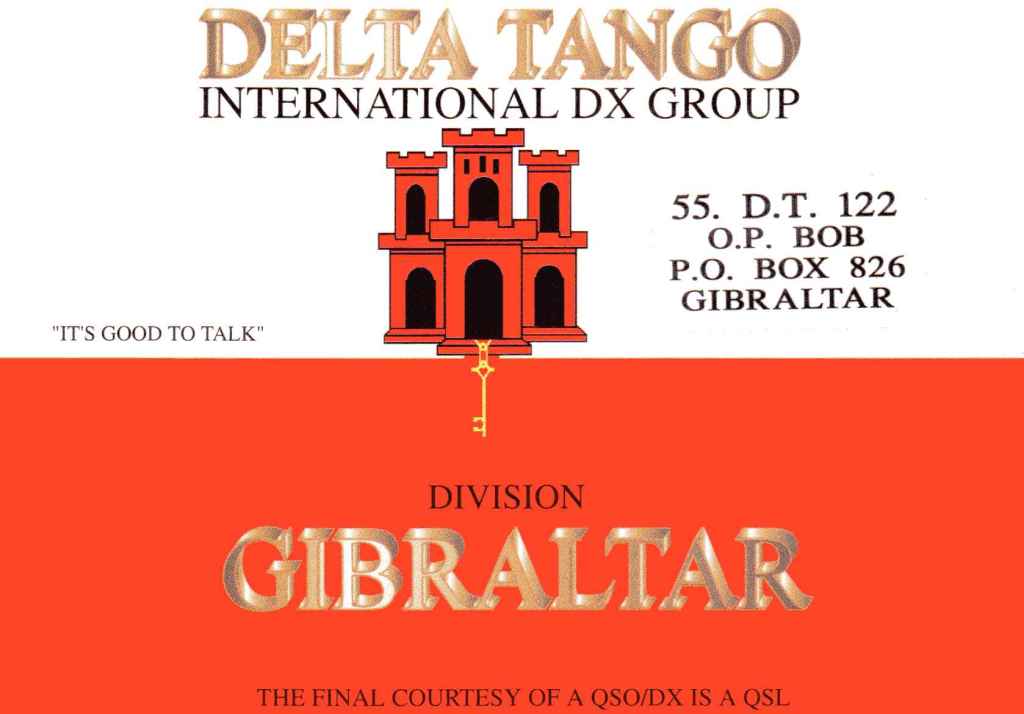
- Identification: Because standard CB does not issue formal amateur call signs, operators use club-issued identification numbers, grid locators, or custom identifiers.
- Legality: Regulations vary by country. In many regions (including under FCC rules in the United States), digital data transmissions and computer-driven terminal modes are legally restricted or prohibited on the allocated 27 MHz Citizens Band, making its status controversial or unauthorized there.


What is the purpose of FT8?
FT8 (Franke-Taylor design, 8-frequency shift keying) is an amateur radio digital mode designed to make reliable, long-distance (DX) contacts under extreme weak-signal conditions. It allows operators to communicate globally using low power or compromised, restricted antennas where traditional voice or Morse code fail. FT8 is explicitly designed and classified as a weak-signal digital mode. Using advanced computer signal processing and narrow bandwidths (50 Hz), it can successfully decode signals with a signal-to-noise ratio (SNR) as low as −20 dB in a 2500 Hz bandwidth—far below what the human ear can hear or traditional voice modes can process.
WTSJT_CB What is it, WSJT-CB is a modified version (fork) of the well-known amateur radio program WSJT-X, specifically optimized for weak-signal digital communication on the 27 MHz band (the eleven-meter band / CB radio).

What WSJT-CB does 27 MHz focus: It adapts the functionalities of WSJT-X for use on the citizen band (CB). Weak signals: This allows you to use digital modes such as FT8 and WSPR on the CB band, even when signals are too weak to hear. Custom software: Unnecessary features for the ham radio environment (such as ham logs or specific amateur lookups) have been omitted or modified for use on the 27 MHz band. You can view the source code and project information via the WSJT-CB GitHub Repository.
Download: go to https://xzgroup.net/wsjt-cb.html
To run FT8 on the 27 MHz CB (Citizens Band), you need a CB radio that supports SSB (Single Sideband), an interface cable to link the radio to your computer, a computer running specialized software, and a tuned 11-meter antenna
Hardware Needed
- SSB-Capable CB Radio: AM-only radios will not work, you need an SSB (USB/LSB) transceiver to pass the audio tones cleanly.
- Computer: A PC (Windows, Mac, or Linux) to process the digital audio signals. [1]
- Radio-to-PC Interface: Either a signal interface card (like a Digirig, SignalLink, or a homebrew isolation transformer circuit) or a direct USB/audio cable setup to connect your computer’s sound card to the mic/speaker jack of the CB.
- Antenna: A properly tuned 11-meter vertical or dipole antenna with a low SWR around 27.265 MHz common international FT8 calling frequency on CB is often channel 26 upper sideband, (27.265 MHz), or channel 38 SSB (27.385 MHz) depending on regional habits.
Software Needed
- FT8 Software: Standard WSJT-X or specialized forks like WSJT-CB (which includes dedicated 11-meter/27 MHz band entries and settings).
- Time Sync Software: Your computer clock must be accurate to the second (using tools like Dimension 4 or Meinberg NTP) because FT8 relies on tight 15-second synchronization.
This is my homepage, a hobby project with no intention of making money from it, so it is not commercial. I hope you can find what you landed on here; if you are in the wrong place, click here.
My Source for this page: Google.com, Pictures my own.
[…] Marcel, thanks for this second contact, now on FT8, […]